Every dimension on a drawing has a tolerance — either stated explicitly or implied by a title block. That tolerance tells the machinist how much variation is acceptable. And it's the single biggest factor in what your part will cost.
The Tolerance Spectrum
Why Tighter Costs More
Every step tighter on the tolerance scale adds time. The machine runs slower. The operator measures more often. The tooling wears faster. Scrap rates go up. And inspection at the end takes longer because every critical dimension needs verification.
Going from ±0.005" to ±0.001" doesn't just cost 2x more — it can cost 3-5x more depending on the feature, material, and geometry. That's not a markup. That's physics.
The Smart Approach
Only tighten tolerances on dimensions that actually matter for function. A bore that receives a bearing? Yes, hold that to ±0.001". The overall length of a bracket that bolts to a frame? ±0.010" is probably fine.
The best drawings we see use tight tolerances surgically — on 3-5 critical features — and let everything else float at standard. This keeps cost down and communicates exactly what matters.
GD&T: When Position Matters More Than Size
Sometimes it's not the size of a hole that matters — it's where it is relative to other features. That's where Geometric Dimensioning and Tolerancing (GD&T) comes in. True position callouts, flatness, perpendicularity, and runout tell the shop what actually needs to be controlled.
If you're not sure whether to use GD&T, ask your shop. A good machinist can look at your part and tell you which features need positional control and which don't.
Our Capability
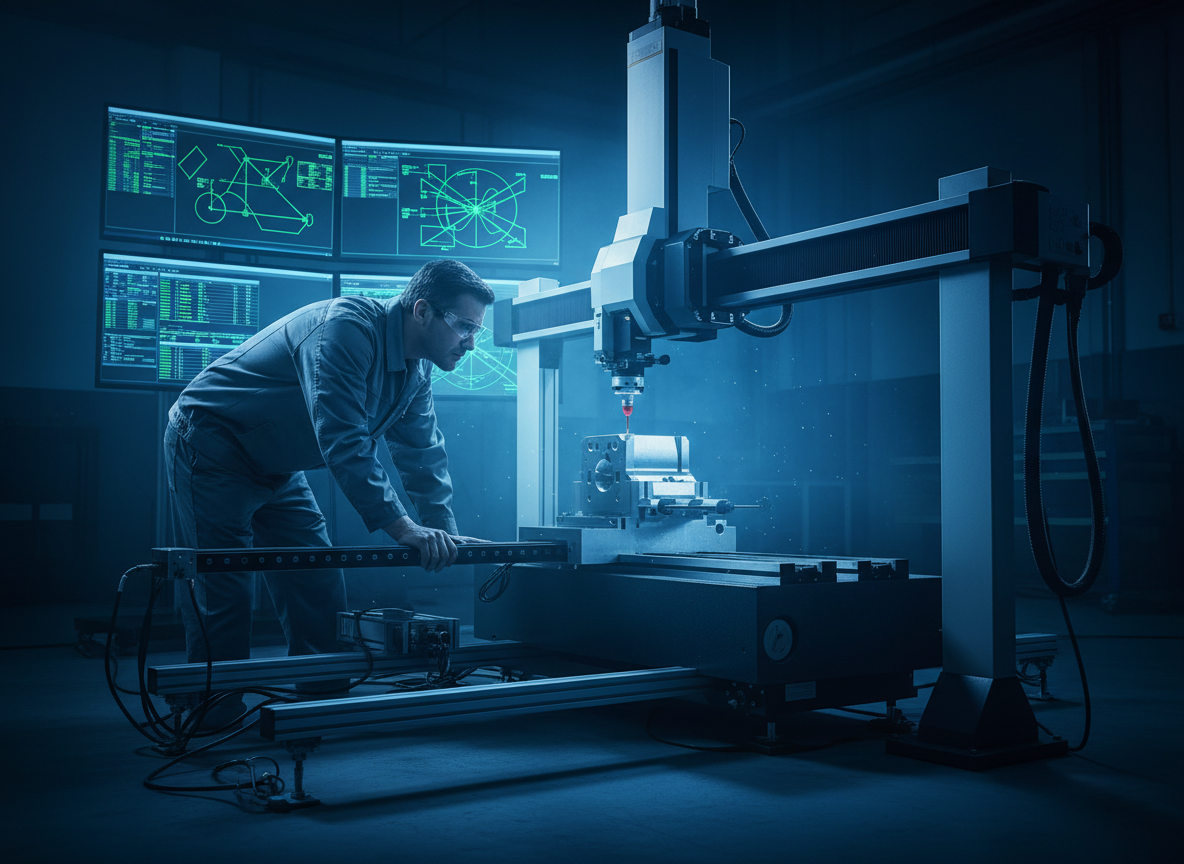
At Reliable Manufacturing, we hold tolerances as tight as ±0.0005" when needed, verified with our Keyence Optical CMM and CNC optical comparator. But we'll also tell you when you're over-specifying — because saving you money on tolerances you don't need is part of the job.